Practical ideas for facilitating workshops & people development

Posts tagged ‘adult learning’

Personality type and facilitation

This post follows the theme of my last post “Facilitation begins with you” understanding yourself and your style when facilitating.

In the last blog I focused on VARK as a model this time I start personality types. I like to use the Myers Briggs Personality Type Indicator (MBTI). It is more complicated than many other simple types with only four quadrants however it provides a more in-depth understanding – particularly if like me you don’t fit easily into one of the quadrants.

I am an INTJ – in simple terms an introvert, big picture, logical and organised person. What do I need to consider as a facilitator when working with different types?

As an introvert I need some time out to rebuild my energy levels. Lots of interaction can be tiring to an introvert as compared to an extravert who gains energy from other people. When I’m facilitating I see this as an opportunity to practice being my opposite and many people in the group are often surprised to find out my type.

To manage this I need to give myself time out if possible in the breaks and especially at the end of the day if the workshop is for two days. I don’t facilitate for more than 2 days in a row and I make sure I get plenty of rest between workshops.

Co-facilitating works well for me as it gives some break time during the workshop to build up my energy.

Introverts also like to think before they speak – this can be challenging when you are the deliverer and another reason while I prefer a facilitative approach compared to deliverer. As the facilitator I draw on the experiences of the individuals in the group to answer questions from the floor – “What do members of the group think about that?” is a great way to deflect the question, buy some thinking time and draw on all of the vast experiences of the adults in the room.

Keep in mind the “think before speak” and provide time for the introverts to think about answers before group input  – they prefer not to be put on the spot unless it’s a topic they are knowledgable about.

My next blog will focus on the S/N (detail vs big picture) dichotomy in MBTI.

Please feel free to share my blog with your colleagues and friends and provide me with any feedback – it’s the best way to learn!


Facilitation beings with you!

Have you ever been to a workshop with a mate only to find what you thought was a fabulous presentation they found difficult to follow and were disengaged?

As a facilitator have you ever spent time really analyzing yourself? Do we fall into the pattern of believing everyone likes to learn like we do?

Time spent understanding ourselves is not only valuable for us it’s extremely important in making sure we engage our audience more completely. There are lots of frameworks which can be used – we use these in our planning but have we really applied them to ourselves and how this plays out as we facilitate.

One of the frameworks I like to use is VARK – Visual, Auditory, Read-write, Kinaesthetic, if you visit www.vark-learn.com you can complete a simple on line questionnaire to determine your preferences. There are also great resources on this website  you can download and consider for your workshops.

I am a very visual leaner and use lots of visual aids in my presentations – coloured markers, pictures and posters. I enjoy some creativity and seeing flip charts developed throughout the workshop as a preference to power point.

My lowest score is auditory and I find auditory presenters who get up and speak with no visual aids or notes very difficult to concentrate on – I remember in pictures not words. Unless I take lots of notes I don’t retain much of their presentation. Auditory learners enjoy story telling and if stories are told with visual clues this will help me learn.

Read -write preferences have told me about the importance of the notes and hand outs at the workshop. They like detail in the notes and spaces to write their own thoughts and observations or add to the detail provided. For me this has been something I have needed to focus on developing, I would provide brief notes with lots of space for people to write their own ideas and have been told this is not enough for many with this preference.

Kinaesthetic learners like to be doing something. They need to be actively engaged in their learning – build in activities and time to practice new skills in a safe environment. Consider how you react to activities and the types of activities in workshops – for example I hate role plays and dislike being “put on the spot”, however am quite comfortable with small group activities and reporting back.

Consider your preferences and how this might impact on your style – what areas do you need to focus on more to capture all types?

I will continue this theme in future blogs looking more at the role of the facilitator and understanding styles and impacts.

Closing the workshop with Wow

I believe it’s very important to finish on time and close the workshop – don’t let people drift off unsure of the end.

I have attended workshops with very enthusiastic presenters who just keep on going! One I recall missed afternoon tea completely and then half an hour after his closing time participants started to leave. Without a formal end there was no opportunity to reflect on learning’s, evaluate the workshop or celebrate the success.

The closing process begins with referring back to the “Expectations” flip chart you set up at the beginning of the session. Run through the list and check with participants to see if their expectations have been met.

This simple exercise helps them to reflect on what it was they were looking for at the beginning and also provides reflection for the group about the topics covered. It is the beginning of the closure process.

The benefits of closing the day

  • Provides time to reflect on learning’s
  • Pick up ideas for others as to their key learning’s
  • Facilitators gain a sense of what has been valuable to the group
  • You know the day has ended

Closing can take many forms and simply be a “closing comment” from each person. As a facilitator I like to know something people will take away so often ask “What is something you will now do differently?”

During the close I like to use the ball as I did at the beginning of the workshop, throwing the ball around the room randomly as people provide a closing comment. Make your closing comment the last one of the group so you can include your thankyou and reminder of any follow up activities.

If the workshop has included a lot of ‘sitting’ at tables standing in a circle is an effective way to change the dynamics at the end.

Facilitation Skills workshop

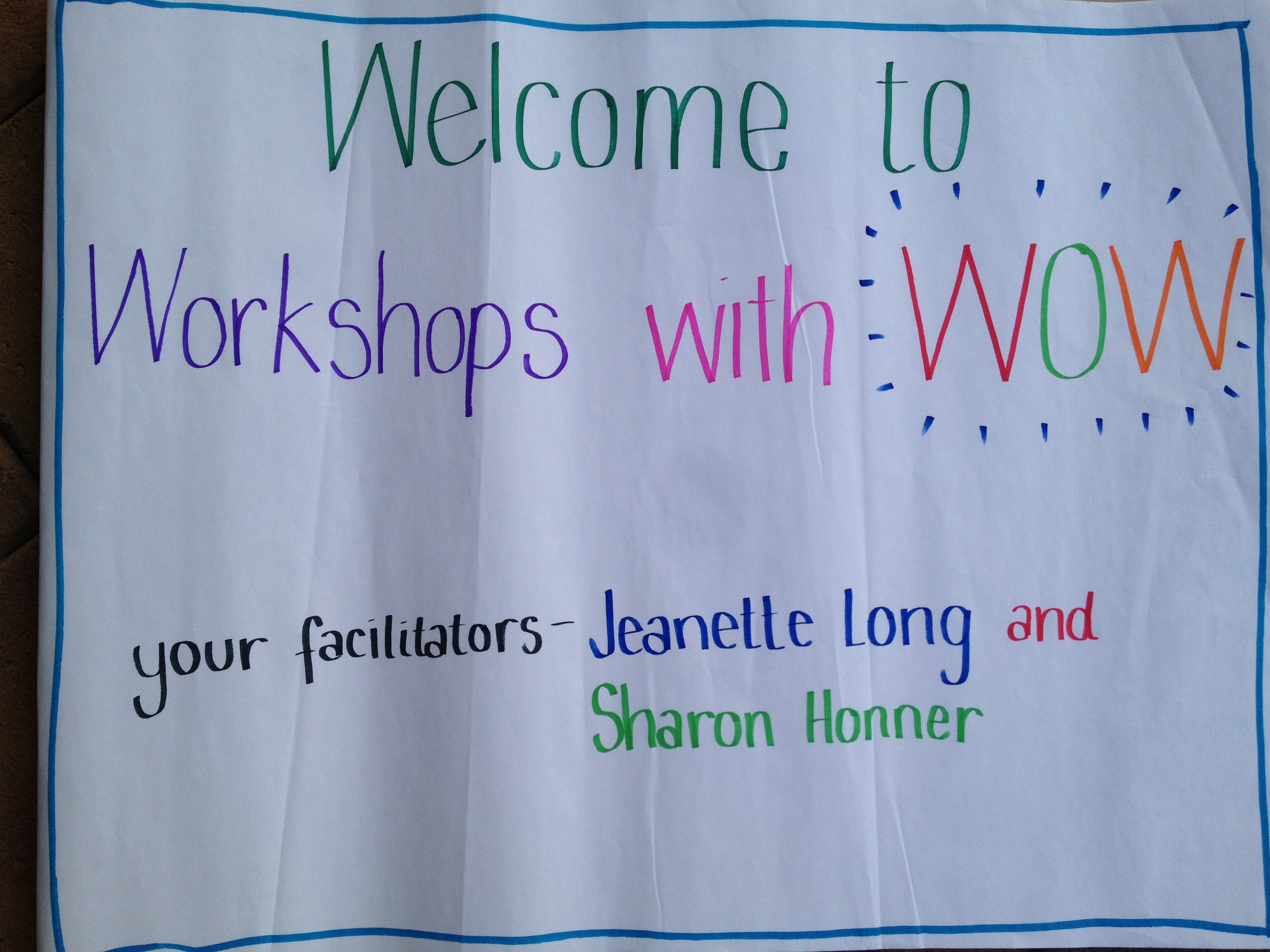
On Thursday and Friday last week Sharon and I facilitated our “Facilitation Skills Workshop”. We enjoyed working with our enthusiastic participants in this interactive workshop.
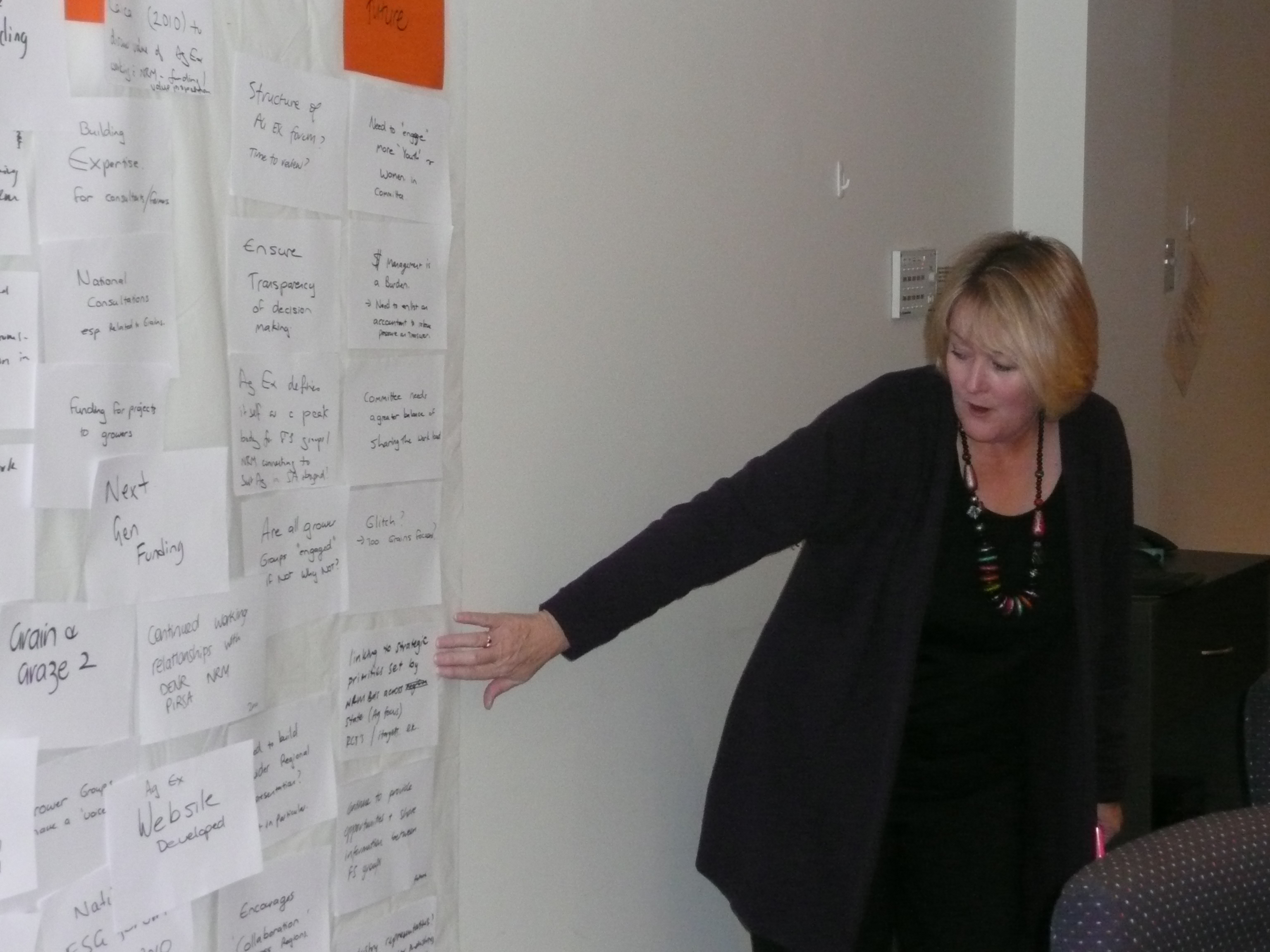
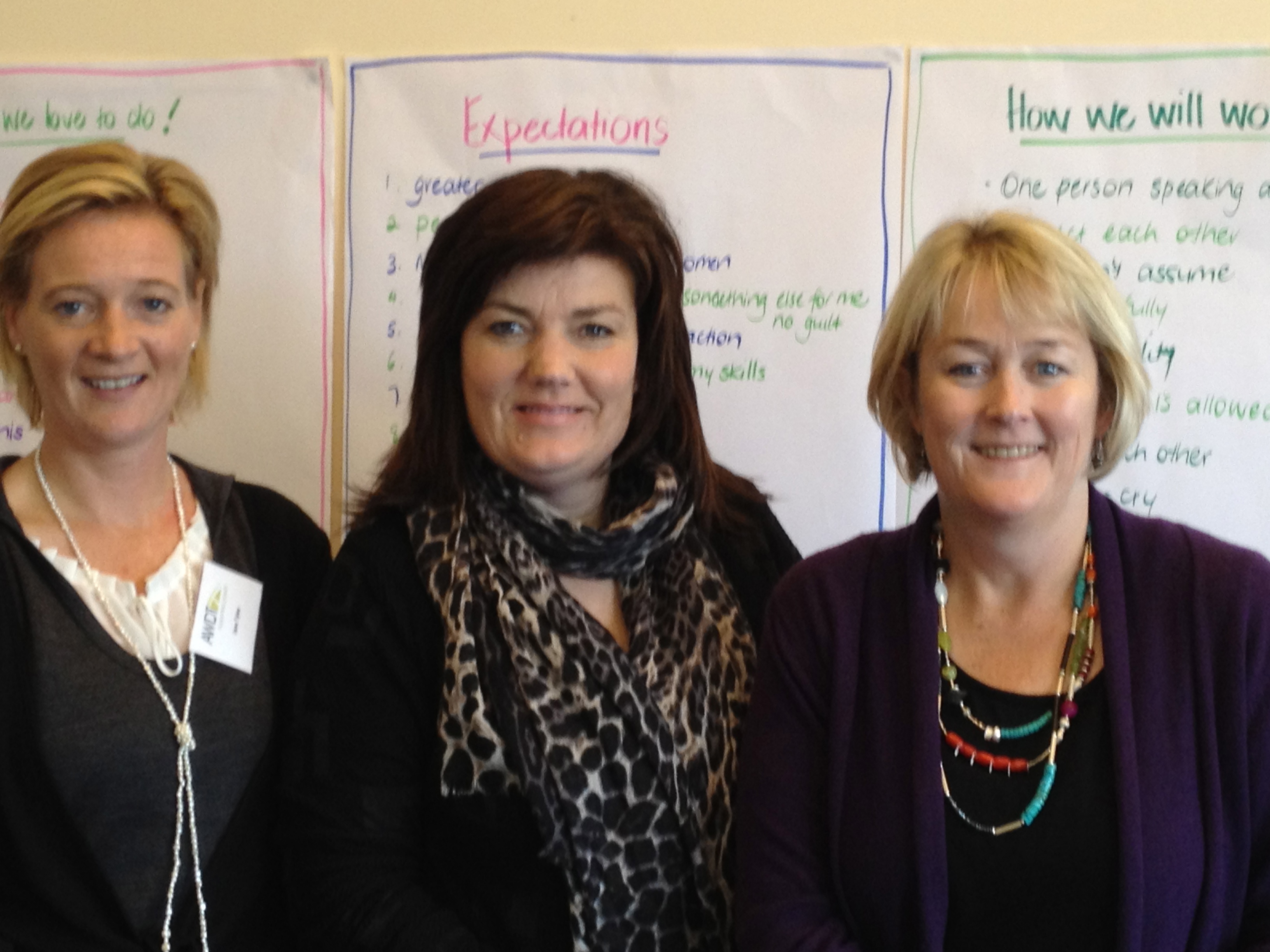
The workshop aims to provide practical hands-on skills to facilitate effective sessions.

Our focus for facilitation is – a structured session where participants are guided through a process to achieve an outcome. The outcome is created, accepted and understood by all.

The facilitator is “content free” their role is to guide the group to achieve an outcome, not to have knowledge of the topic. They draw the information from the group in an inclusive manner so all have ownership in the outcome.

This concept can be a challenge for people who normally provide information to, or chair, a group of people. It requires a change in mind set from being in control to being there to build consensus.

Our next “Facilitation Skills” workshop in scheduled for November 1st and 2nd in Adelaide.

This workshop was funded by GRDC and DAFF Caring for Country as part of the Grain and Graze 2 program, Adaptive Management theme for East SA. This project is managed by the Ag Excellence Alliance. 

Thankyou for the comments about my last couple of blogs – I’m sorry I haven’t answered them – I will soon. Look forward to continuing to hear your thoughts. Jeanette

Co-facilitation with Wow

I often co-facilitate, sometime with someone I know really well and have well established rapport and understanding and sometime with someone new. It adds another dimension not only for the participants, I have the great opportunity to watch and learn from someone else.

Co-facilitation is great for groups and for the facilitators the benefits include:

  • Different approaches will appeal to different participants
  • Provides the ability for one person to be focused on the group process and participants while other facilitates
  • Facilitators can manage their energy – hopefully be less tired at the end of the session
  • A blend of skills, knowledge and experiences
  • Opportunity for one facilitator to work with individuals at times while the other works the room
  • Its particularly good to have more than one facilitator with large groups who are working as small teams during the day
  • Learning from each others way of operating

For co-facilitation to work really well spend time establishing the ground rules before you start

  • Have a well developed and agreed session plan
  • Be clear on each persons role. Who is doing what when and who is the lead when.
  • Be clear about sticking to time frames. Flexibility with time can work as long as this is discussed prior. Personally I put a lot of effort into preparation and to have my time cut significantly through poor process is very frustrating and compromises the ability to facilitate well.
  • Stay focused in each others sessions – determine what you might be watching for in the group, in each other and about the process.
  • Bouncing / value adding or interrupting …  determine what are your boundaries around this. Done well it can appear seam-less and be very effective, done poorly the participants will be frustrated and observe frustration in the facilitators. Set up some signals for engagement and withdrawal (or to shut each other up!). This can be a simple as a “I’ll throw a question your way if I need your input”. Be respectful of each other.
  •  Allow time for feedback afterwards. What worked well? What could be done differently? Be open and honest with each other – this is a great way to develop skills and learn from each others way of operating. Analyse the process and how the participants reacted to it, were the defined outcomes met?

Powerpoints – a few alternatives

Death by Powerpoint… we have heard this comment so many times and yet not much changes …many presenters continue to rely on powerpoint presentations.

They do have their place, however sitting through a whole day of powerpoints is tiring and I don’t believe a very effective way to learn. They work in a “telling” relationship such as a conference presentation where you are presenting facts or data.

In a facilitated workshop using adult learning principles where ideas are drawn from the group there are other effective ways to discuss information and facts.

When I reflect on the conferences I have attended over the years the presenters I remember are often the ones who didn’t use a powerpoint and were able to get their message across in a simple effective way using tools like flip charts and drawing on the audience.

What can we do instead?

  • Flip charts – plan your presentation and use the flip charts to get your message across as you go. I personally prefer to use flip charts rather than a whiteboard as the sheets can be put up around the room and referred to as required (Once the whiteboard has been cleaned the information is lost).  Participants have told me they like the sheets to be put up in order so they can reflect back on the discussion and draw on the previous information as needed.
  • If you are not confident enough to draw them up as you go pre-prepare the flip charts – think about the material you would use on your powerpoint and develop some flip charts with some of the information on them prior to the workshop. Use the group to build the remaining information through an inclusive discussion process. The participants will have ownership in the discussion and are more likely to leave the workshop remembering the concepts you were aiming to impart.
  • If you are presenting the same information over and over, how about having some posters made up with critical information or models, these can be put up around the room and referred to as required.
  • Use a combination of flip charts and powerpoint – only using the powerpoint for essential visual information such as graphs or diagrams. Remember the “B” for blank button which turns off the powerpoint so the focus can be on the facilitator or others in the room when required.
  • Find some you-tube clips that deliver your message in a few minutes and then discuss the material with the group – capture their ideas on a flip chart.

I’d be keen to hear others ideas about powerpoint and what could be done instead.

If you would like to follow my blog enter your email address in the space on the right hand side, you will be send a confirmation email and you must click on confirm before you are added to the email list.

Rural women – reflections

This blog includes a few reflections on returning from a wonderful trip facilitating workshops with rural women in NZ.

While in NZ I was asked about the differences between rural women in NZ and Australia …mmm  …not a lot would now be my answer.

  • Many women on farms fall in love with a man and find themselves married to a man, a farm and his family. They  often find themselves in positions of farm administration, book-keeping, marketing and being the farm Gofer – not necessarily using their training, skills or their strengths. Sometimes doing tasks they do not enjoy. A recognition of what these women do bring to the business and community will raise happiness, increase business success and, I’m sure, improve marriages.
  • There is enormous value in bringing like-minded women together to share experiences and provide them with the opportunity to talk about their businesses. Women have often told me that facilitated sessions for rural women provide a unique chance for them to focus on themselves and their businesses.
  • Women enjoy the opportunity to build their skills in a safe supportive environment – both business and technical skills – before they will feel safe to integrate into the mainstream agricultural sector. Over the years many male deliverers have commented to me about the though provoking questions they receive from a women’s group. The same women will tell me they wouldn’t ask those questions in front of males because they perceive their knowledge of agriculture to be less than the men.
  • Programs like First Steps, developed  by the Agri Womens Development Trust, provides a valuable time for women to focus on themselves as individuals and put aside the “roles” or “hats” as wife, mother, daughter, farm worker etc and develop personal plans for their future and their role in their farming business.
  • Many farm businesses do not include training or professional development in their budgets – this is an important shift that  we can make.

I strongly believe investment in training our rural women will ensure vibrant rural communities, family businesses as well as environmental sustainability.

NZ rural women with wow!

It’s great to leave a workshop with that feeling the two days has made a real difference to people’s lives. That’s the Wow for me!

The First Steps,workshop in Masterton NZ did just this. Observing the changes in body posture, the light in peoples eyes, the goals that were set and shared, the “Ahah” moments and the closing comments delivered with passion……left me feeling Wow!

This fabulous workshop has been designed utilising the detailed research carried out by Lindy Nelson of the Agri-Womens Development Trust in New Zealand. Lindy teamed with a psychologist to develop the program and a pilot program was facilitated in 2011. I feel very fortunate that Lindy trusts me to facilitate the first national role out of her program.

The workshop provides women with an opportunity to focus on themselves and their own development for the two days. They explore their values, passions, skills and strengths.

Transferable skills are determined – recognising all of those wonderful skills women have developed in their many volunteer capacities; kindy committees, playgroup, school groups, community events, as well as in their farming businesses; doing the book-work, farm work, marketing and so on… these are all very real skills that are transferable into new ventures,the workplace or industry leadership roles.

The women spend time reviewing the constraints they face with particular reference to the constraints Lindy identified in her research. Options to manage and minimise these are discussed and documented. Everyone leaves the workshop with goals set and an action plan developed ready to take their next step.

I am looking forward to working with more wonderful NZ agri-women over the next week as we roll First Steps workshops at Taihape and Asburton.

I’d love to see Australian women have the opportunity to participate in a program such as First Steps. for more information about the Trust and Lindy http://www.awdt.org.nz or like the Facebook page http://www.facebook.com/AgriWomensDevelopmentTrust

Workshops with rural women

I love working with rural women. They are a generous audience who appreciate what you do for them, particularly if you work with them to determine their unique needs.

As a rural woman myself I have been fortunate to work with many groups of women for many years. I am particularly excited to be heading off to New Zealand on Sunday to work with the Agri-Womens Development Trust facilitating their “First Steps” program. This program is a two day exploratory workshop for rural women who have developed skills/strengths within the context of their rural communities, family and farming lives, who are now contemplating making changes to their lives, and taking their skills to a new level. These women are often the backbone of their communities, involved in organising, fund-raising and are usually self-starters.

New Zealand is fortunate to have Lindy Nelson – a self starter! – who has developed the Trust. More information can be found on the website http://www.awdt.org.nz.

The Partners in Grain project has also provided me with a unique opportunity to pursue my passion of facilitating women and young people in the Grains industry. This project is funded by GRDC has been successfully operating in Australia for 10 years providing regional training opportunities.

Working in local regions can bring its own set of challenges. Here a few of my tips for working with rural women;

  • Find a local champion who shares a passion for learning and community
  • Research local events, school events etc  – don’t expect women to turn up if the local school has sports day!
  • Run the workshop from 9.30-3.00 allow women time to get the children off to school and pick them up afterwards.
  • Ask the group what they would like to learn and adjust the workshop to meet their immediate needs.
  • Check about catering, tea and coffee. Support the locals and ask for local catering – choose a local group that’s important to your audience.
  • Check what’s available at the venue and what you need to bring – country venues may also need setting up so allow plenty of time.
  • Due to distance it isn’t always possible to see the venue prior to the workshop so ask lots of questions. Run through a check list about – lighting, heating/cooling, floor covering (acoustics) size etc.
  • Talk to your local champion about promotion of the event. What is the most effective communication mechanism for that district – school newsletter, community newsletter etc.
  • Having a flexible approach and being baby friendly provides an opportunity for more women to attend your training event.
  • Finally – always finish on time – school pickups are important!

If you would like to follow my blog enter your email address in the box on the top right hand side of the page. You will be send a confirmation email and need to click on the link to receive my weekly blog via email. 

Things to play with in workshops

I love to see creativity in workshops.

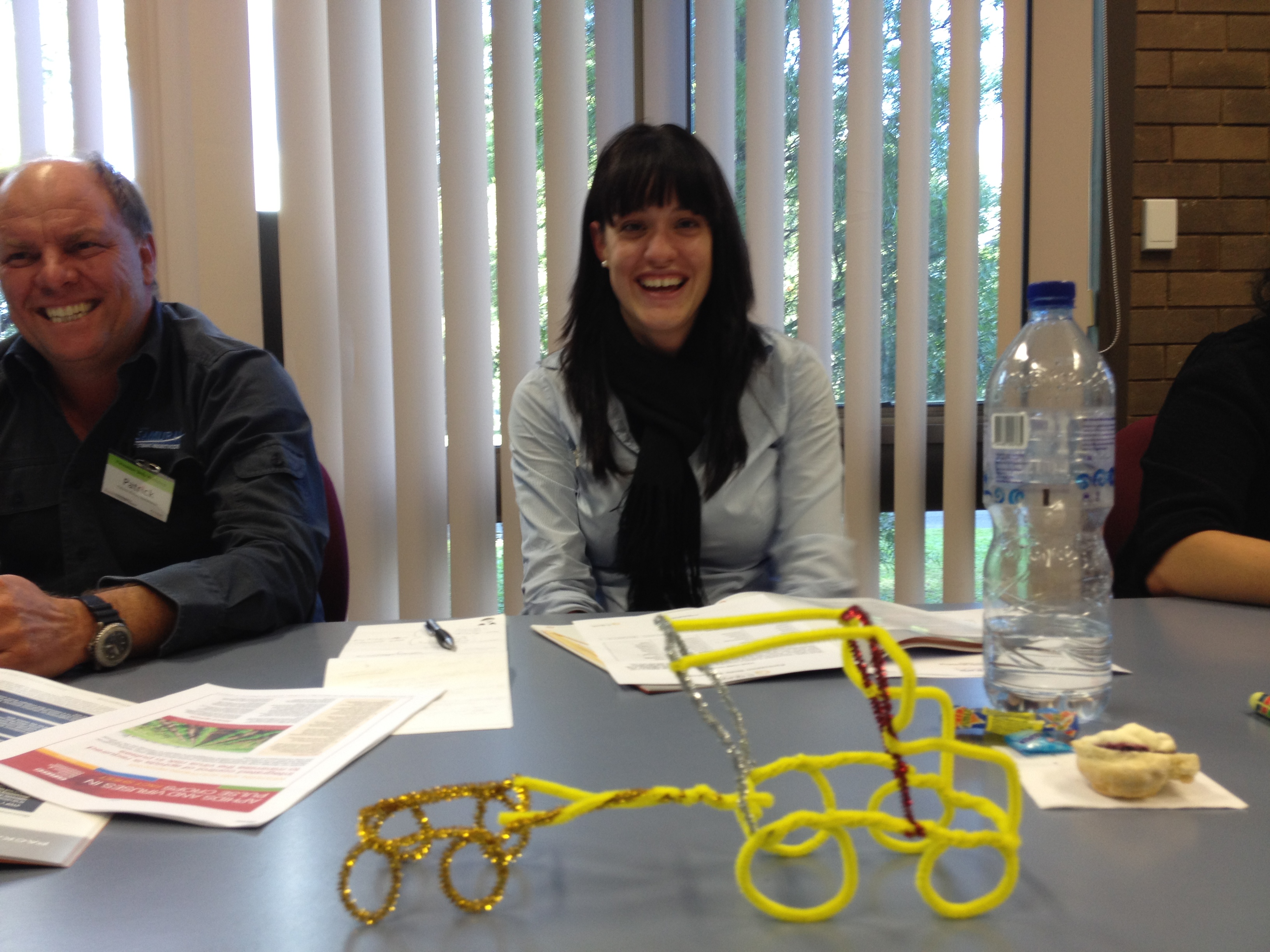
Providing things for participants to play with like pipe cleaners and stress balls is so simple and so effective.

Pipe cleaners can be made into all types of objects, fiddled with, rolled around fingers and the great thing about them is that they are quiet!

I’m always amazed at the adults in my workshops who are delighted when they discover the pipe cleaners are not on the table for a mysterious facilitative activity but are simply there to play with.

“Great, I won’t be sitting here clicking my pen!”

For many of us its a long time since we sat in a school class room all day, we are used to being busy, active and having things to do with our hands.

Kinaesthetic learners tell me their learning increases if they are busy doing something, and this includes playing with toys. It may appear like they are not interested or participating in the program; experience has shown me this is not the case.

Cheap shops provide a great array of soft toys, balls and blocks which can be put on the tables. They add a sense of fun and lightness and assist with creative thinking.

Recently one of the participants collected all of the pipe-cleaners at the end of the workshop and asked if she could take them for a meeting the next day!

Make the learning experience fun, enjoy the outcome and the creations!