Practical ideas for facilitating workshops & people development

Posts tagged ‘workshops’

20 ideas to create Field Days with Wow

What gives a field day the Wow factor?

This blog is a compilation of the emails and comments I have collected from my last post. I hope you all enjoy reading it and gain some useful insights into what gives a field day the Wow factor.

  1. Seeing or hearing something new – this could be machinery or a trial
  2. When planning the event the organizers have thought carefully about the objectives & key messages
  3. When the focus is on a few topics.
  4. Hearing the real life story from someone who has done it. Give the research or theory and then a practical case study of whats worked in the field and what could be done differently.
  5. Time for networking, name tags, time to introduce people and find about the other people at the event.
  6. Interactive sessions – get rid of the power points
  7. Plenty of time for questions and discussion
  8. Evaluation – having the opportunity to let the organisers know what worked well and what could be done differently. These need to be written so people can be honest with their answers.
  9. BBQ, great food
  10. Have a microphone!! A PA system with back up batteries, make sure people can hear whats going on.
  11. Be aware of the target audience and aim the information at the right level.
  12. Relevant up-to-date information
  13. Including some “blue-sky” research thats related to the region.
  14. Hands on activities in the trial – not all stand and listen
  15. Chairs to sit on around the site
  16. Independent advice from industry experts
  17. Field days that consider the needs of women – timing, location toilet and child friendly
  18. Opportunity for small groups discussions
  19. Be aware of the impact of the location and outside noise – good locations are accessible even when it’s wet, they are quiet (not with a train line or highway alongside the site)
  20. Being aware of why farmers attend these events – knowledge, social occasion, exchanging ideas, seeing something different and providing for all of these creates the wow.
The most commonly highlighted mistake was cramming too much into the field day – information overload, too many sessions, too many power points …

Thanks to everyone for your fantastic contribution to this Blog topic.

It doesn’t end here! Please continue to send through your thoughts and comments about great field days so I can continue my blog.

To follow this blog via email put your email address in the top right hand corner of this page – you will be send an email with a link to confirm you would like to follow the blog. 
Tips for managing energy in workshops

Having the opportunity to observe a workshop is a great chance to watch the energy levels of the room and think about how to manage this effectively.

I believe keeping the energy up is the facilitators responsibility. I like participants to leave at the end of the session fired up with energy instead of drained and tired.

Some tips for energy management

  • Let your passion for the topic show. Passion breeds energy which will flow into the group.
  • Move, have the room set so you can walk into the centre of the room
  • Use different mediums – flip charts, activities
  • Use power point as little as possible
  • Move people around for different activities encourage them work with a variety of people
  • Ask people to sit in a different spot in the room, next to someone else, after a break.
  • Think about attention spans – how long is yours? apply this to the group
  • Use your voice to express a point, tell as story.

Enthusiastic participants add energy to the room,use this to enthuse others and not to dominate.

Be aware of the after lunch flat spot – about 2pm. This is a good time to include an activity which includes moving as well as using our brains. Be careful of asking the group if they would like to do an activity at this time. As humans we often take the path of least resistance when feeling flat, our role is to motivate them to get their energy back.

When the participants are flat be aware that sitting with them (on the same level) may also affect your energy. You need to make a conscious effort to stand up and move around putting energy back oonto the group when participants are flat.

When workshops end mid afternoon its even more important to get through the afternoon flat spot with an activity. I want my particiants to leave on a high not on a low. They are more likely to encourage others to attend if they leave full of enthusiasm.

Please share your ideas as comments.

If you would like to sign up to receive this blog via email enter your address in the space on the right hand side at the top of the page.

Workshop Introductions with Wow

One of my pet hates is going along to a workshop where we are not given the opportunity to introduce ourselves to the others in room. Yes, you can argue it takes up valuable time especially in a short workshop, however, one of the key drivers for people to attend events is to network and meet like minded people.

A short introduction

  • provides safety, we all get a sense of who else is in the room and are more likely to share our experiences
  • gives an opportunity for the networkers in the room to identify whom they would like to talk to in the breaks
  • allows the introverts speaking time. If an introvert doesn’t speak early in the session they can often sit through the workshop and not have the confidence to share their ideas.
  • sets the scene for the workshop and builds the group or team

Robyn asked a question about timing with workshops especially with introductions. The way I like to handle this is by giving a time frame and clear instructions for the introductions. I will put this up on the whiteboard so it is understood by everyone.

For example

Introductions (in one minute)

  • name
  • location 
  • What attracted you to attend this session?

I find that if everyone is clear about the timeframe and the instructions they tend to stick to the guidelines and not ramble on. If they do ramble on, the pre-set timeframe gives the facilitator permission to politely close them down and move onto the next person.

Another tip is to ask everyone to write down their introductions, give them a minute or two to write down what they are going to say to the group. This gives the introverts thinking time keeps the extroverts quiet for a minute. It also means people have clarified their thinking and will listen to what the person speaking is saying rather than preparing their own introduction in their head.

Rather than working your way around the room ask for a volunteer to start and then move randomly around the room. I like to use a ball to throw around rather than creeping from person to person. The ball provides some fun and lightness to the process.

There are lots of great tools for introductions and icebreakers to build the group which I will cover in future blogs.

Getting started with Wow

Make your workshop start with Wow!

And I mean before your workshop even starts. What’s the atmosphere you want to create as your participants walk into the room? ….I want them to think “Wow this looks interesting I’m glad I made the effort to be here.”

Welcome your participants individually as they arrive. I love a quote by Robyn Henderson of Networking to Win – “If you are the host treate your guests how you would like to be hosted.”

How would you like to be welcomed as you arrive? By a facilitator who is aloof at the front of the room, someone who distances themselves as the expert, someone who is flat out getting organised for the event?

We have alll been the participant walking into a room for a workshops where we didn’t know anyone… how would you like to be treated? how would you like to feel? What would you like to see?

I like a friendly warm welcome so participants feel comfortable and at ease … here are some tips

  • Be organised! By the time your first participant walks in the room should be set up ready to roll.
  • Have a welcome on your flip chart or Power point slide – that way people know they are in the right place.
  • Greet each paticipant as they walk in – shake their hand … might seem like I’m stating the obvious, however, from experience it doesn’t always happen.
  • Have name tags ready … this makes life much easier for you, not only to introduce participants to each other,  but also if you are like me remembering names is not a strong point.
  • Introduce the participants to each other, if there is a conversation happening in the room , provide the new person with a lead into the conversation.
  • Some facilitators like to use music before the workshop and in breaks.. this can be effective, however think about appropriateness of the music and importantly the volume.
I highly recommend visiting Robyn Henderson’s site    www.networkingtowin.com.au  Robyn has great networking apply any of which apply to greeting and working with participants.


Finally …Wow! Thanks for all the great comments. You have all provided lots of topics for discussion and I’m really looking forward to tackling them over the next few weeks.

Send in your burning questions and comments …

Food and the Wow factor in workshops

The importance of great food has come up in every conversation I have had recently about the Wow factor. However, participants don’t seem to remember the details about the food unless there was something wrong with it.

Last year we ran a large workshop in Adelaide where we brought in a group of farmers from across the state, morning tea was on arrival and was enjoyed by all … there were several comments of appreciation about having a substantial morning tea after a long drive…. so we were off to a good start in the food stakes.

The morning workshops sessions all went well, interesting speakers, good interaction and discussion.

Lunch arrived and all looked good, large pizza’s and salad…but things were about to slide! There was only one piece of pizza per person .. and this was farmers we were feeding. We quickly spoke to the hotel caterers and requested more food…. well, too late for more pizza. They said they could provide plates of wedges…. and so they did. Many people had only wedges for lunch. Not exactly what we had in mind.

One of the questions on the feedback forms was “What did you find challenging about the workshop?” Well .. I’m sure you can all guess the answer to that question – lunch! Not only did the food affect the mood of the afternoon session it sabotaged our evaluation as well.

What went wrong – the event organiser who we originally booked the venue through was on holidays for the week. When we thought we had got it all right one last phone call to check the details would have made the difference.

Never overlook the importance of food in the Wow factor!

What gives workshops the WOW factor?

So what is it that makes you leave a workshop saying “Wow that was a fantastic workshop”?

For me it’s a combination of process and delivery with great attention to detail. It’s often the little things that make all the difference – just starting and finishing on time is so important, such a small detail which is often overlooked. People like us to value their time and sitting around waiting for those who are late isn’t valuing my time! Yes, I know, as the facilitator we want everyone to be there at the start of the workshop so we can go build the atmosphere …so we need techniques to deal with the late comers, or strategies to ensure everyone arrives on time. Timing is a whole topic of it’s own.

To get the discussion started I asked my facebook friends for their ideas about the Wow factor. All of their comments will great topics for future blogs and info for my book, so thanks for all of your input.

  • Humour and the experience of the presenter – not just reading powerpoint slides but using real life examples which bring the topic to life.
  • Appreciate, recognise and value the people in the room. Allow time for reflection.
  • Group work – the opportunity to reflect and explore things that work and things that don’t.
  • It’s always good to know that sometimes you are on the same path as others or the presenter which makes for a bit of a wow (like wow I am doing OK)
  • Networking and sharing with others new ideas  offers wow (how can I try that in my practice and will it work)
  • Personal stories
  • Fun, colour, play – I think these sorts of approaches can bring out the child and some very creative thinking can evolve, we drop some of our barriers to learning.
  • The tricky job of being able to manage the personalities and learning styles in the room.
  • A supportive and comfortable environment – that gives everyone the opportunity to leave the workshop feeling that they were listened to, participated and reflect in their own way.
  • There needs to be something new
  • “A double choc cheesecake with extra cream would do it for me not forgetting the strawberry on the side at smoko!”
Perhaps a key to our thinking about Wow in workshops might come from the Wow in other parts of our life… and our ability as the facilitator to bring this with us into our work…

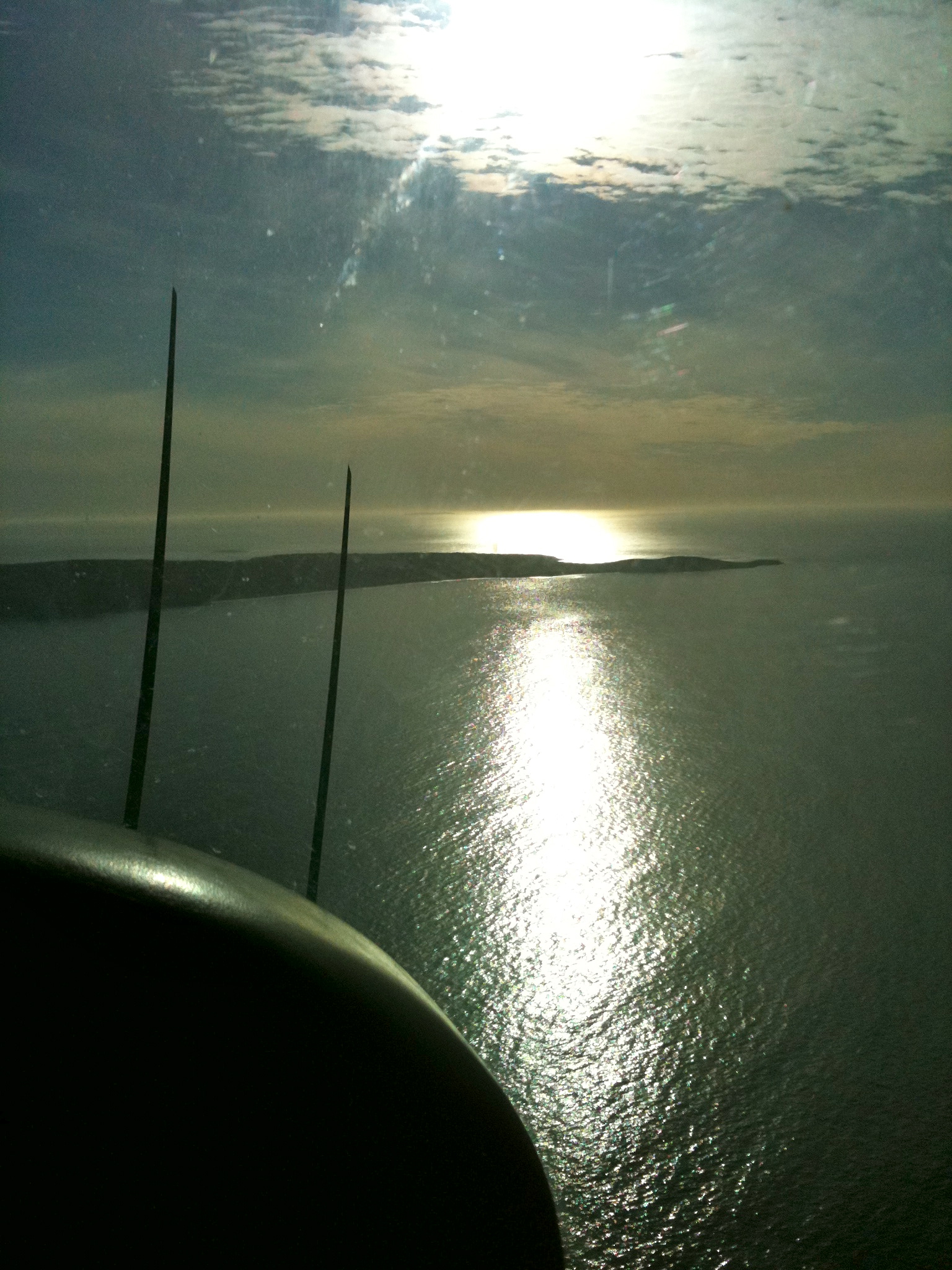
Wow! ...Flying with my husband into the sunset in his small plane.