Practical ideas for facilitating workshops & people development

Personality Types again

This blog brings us back to the discussion about personality types in facilitation and workshops. We are up to discussing the Feeling/Thinking dichotomy in Myers Briggs which is how we make decisions.

Thinking (T) types make decisions more logically and analytical, focusing on facts – they can appear critical. Feeling (F) types take into consideration their values and beliefs and the impacts on people in their decisions.

As a T, it wasn’t until I co-facilitated with an F several years ago that I realised I didn’t do a very good job of catering for F types. This wonderful woman looked after the comforts in the workshop, she focused on lollies, food, water on the tables, making the environment as comfortable as possible – all common sense I know but what I noticed was the way she went about it.

She also was fantastic at hosting people as they arrived, ensuring they were introduced to someone and felt welcomed into the training room. I watched and learnt from her warm friendly approach.Years later we were complimented by a workshop attendee about how comfortable she felt when arriving at one of our training events, something she told us, wasn’t wasn’t common for her.

The theory of MBTI refers to F children who don’t like the teacher having trouble learning and how T types look for competence in the teacher. In adult education this reminds us of the importance of establishing competence with our group as well as making them feel comfortable.

T’s like to know the person in front has the skills, qualifications, experience and credibility to be facilitating or delivering on a topic. Once you have established competence they are more open to learning and enjoy debating and analysing information.

Finally I have found F types are very good at “picking up on” emotions in others including myself as the facilitator.  Be careful about your own projections – leave your emotional baggage at the door and be there 100% for the participants.

Next week I will focus on the final dichotomy – Judging and Perceiving.

If you would like to receive my blog by email enter your email address in the space at the top of the page – you will receive a confirmation email which you must click on to confirm.
Extension Adoption Program

The GRDC Extension, Adoption, Training and Support project is open for expressions of interest until October 30th. This project builds the skills of experienced advisers and researchers in adoption, extension, evaluation and communication processes. It aims to reduce the time frame from from research to farmer practice change.

In it’s third year 8 advisers will be selected to participate in the program which includes

  • A three day workshop in Canberra where participants develop a comprehensive understanding of GRDC and build skills and knowledge in personality types, adoption, evaluation and extension theory and frameworks.
  • A three day field tour providing exposure to new technology and research as well as an opportunity to apply the theory discussed in Canberra.
  • Webinars to further develop skills and discuss learning and outcomes.
  • Mentoring and coaching with the project team

Participants will develop an action plan and apply their learnings in the field as well as mentoring a younger member of the industry. An ongoing network will provide the opportunity to continue sharing skills and knowledge amongst the group post training.

Applications are open for the 2013 group, expressions of interest close on the 30th October. To download the EOI form

http://www.agconsulting.com.au/innovation/current-projects/GRDC-Extension-Adoption-Training-and-Support-Program-July-1-2011/

Or watch the You-Tube

http://www.youtube.com/watch?v=GFunkEFvucM&feature=youtube_gdata_player

Personality type cont…

In my last blog I began unpacking the Myers Briggs Personality Type Indicator (MBTI) and impacts for the facilitator. We looked at Introvert and Extravert – this blog will focus on Senate ( S – detail) and Intuition (N – Big Picture).

The S and N dichotomy in MBTI refers to the way we take in information and learn. I am an N – so big picture person. I go along to a workshop wanting to know “What will I get out of this?” “What will be the outcome?”, I’m not so concerned about the detail until I understand the big picture. This is the opposite to the S Type who requires the detail to clearly understand the big picture.

In simple terms an N builds understanding from the top down, an S builds understanding from the bottom up.

So what are the considerations for the facilitator?

  • We need to cater for both types – provide the big picture of the workshop and then give the detailed agenda. Be careful about going into masses of detail early in the workshop as the N types will switch off – find a balance between the two.
  • When presenting information give the overall model first to capture the N and then break into the detail – review the model at the end to satisfy both types learning.
  • In strategic planning recognise that while N’s love this type of activity, particularly the visioning stage, the S’s are looking forward to getting their teeth into the action planning. Ensure that participants understand the process so they know their needs will be met.

On a personal level I ensure that I plan for the S types – as I’m not one! I ensure I provide a detailed agenda and run through it with the group, I focus on the detail required for learning and think about how to structure my content.

I enjoy facilitating the MBTI as it provides me with the unique opportunity of discussing with the different types what they prefer in a workshop and how they like the process to work.

This post follows the theme of my last post “Facilitation begins with you” understanding yourself and your style when facilitating.

In the last blog I focused on VARK as a model this time I start personality types. I like to use the Myers Briggs Personality Type Indicator (MBTI). It is more complicated than many other simple types with only four quadrants however it provides a more in-depth understanding – particularly if like me you don’t fit easily into one of the quadrants.

I am an INTJ – in simple terms an introvert, big picture, logical and organised person. What do I need to consider as a facilitator when working with different types?

As an introvert I need some time out to rebuild my energy levels. Lots of interaction can be tiring to an introvert as compared to an extravert who gains energy from other people. When I’m facilitating I see this as an opportunity to practice being my opposite and many people in the group are often surprised to find out my type.

To manage this I need to give myself time out if possible in the breaks and especially at the end of the day if the workshop is for two days. I don’t facilitate for more than 2 days in a row and I make sure I get plenty of rest between workshops.

Co-facilitating works well for me as it gives some break time during the workshop to build up my energy.

Introverts also like to think before they speak – this can be challenging when you are the deliverer and another reason while I prefer a facilitative approach compared to deliverer. As the facilitator I draw on the experiences of the individuals in the group to answer questions from the floor – “What do members of the group think about that?” is a great way to deflect the question, buy some thinking time and draw on all of the vast experiences of the adults in the room.

Keep in mind the “think before speak” and provide time for the introverts to think about answers before group input  – they prefer not to be put on the spot unless it’s a topic they are knowledgable about.

My next blog will focus on the S/N (detail vs big picture) dichotomy in MBTI.

Please feel free to share my blog with your colleagues and friends and provide me with any feedback – it’s the best way to learn!

Facilitation beings with you!

Have you ever been to a workshop with a mate only to find what you thought was a fabulous presentation they found difficult to follow and were disengaged?

As a facilitator have you ever spent time really analyzing yourself? Do we fall into the pattern of believing everyone likes to learn like we do?

Time spent understanding ourselves is not only valuable for us it’s extremely important in making sure we engage our audience more completely. There are lots of frameworks which can be used – we use these in our planning but have we really applied them to ourselves and how this plays out as we facilitate.

One of the frameworks I like to use is VARK – Visual, Auditory, Read-write, Kinaesthetic, if you visit www.vark-learn.com you can complete a simple on line questionnaire to determine your preferences. There are also great resources on this website  you can download and consider for your workshops.

I am a very visual leaner and use lots of visual aids in my presentations – coloured markers, pictures and posters. I enjoy some creativity and seeing flip charts developed throughout the workshop as a preference to power point.

My lowest score is auditory and I find auditory presenters who get up and speak with no visual aids or notes very difficult to concentrate on – I remember in pictures not words. Unless I take lots of notes I don’t retain much of their presentation. Auditory learners enjoy story telling and if stories are told with visual clues this will help me learn.

Read -write preferences have told me about the importance of the notes and hand outs at the workshop. They like detail in the notes and spaces to write their own thoughts and observations or add to the detail provided. For me this has been something I have needed to focus on developing, I would provide brief notes with lots of space for people to write their own ideas and have been told this is not enough for many with this preference.

Kinaesthetic learners like to be doing something. They need to be actively engaged in their learning – build in activities and time to practice new skills in a safe environment. Consider how you react to activities and the types of activities in workshops – for example I hate role plays and dislike being “put on the spot”, however am quite comfortable with small group activities and reporting back.

Consider your preferences and how this might impact on your style – what areas do you need to focus on more to capture all types?

I will continue this theme in future blogs looking more at the role of the facilitator and understanding styles and impacts.

I believe it’s very important to finish on time and close the workshop – don’t let people drift off unsure of the end.

I have attended workshops with very enthusiastic presenters who just keep on going! One I recall missed afternoon tea completely and then half an hour after his closing time participants started to leave. Without a formal end there was no opportunity to reflect on learning’s, evaluate the workshop or celebrate the success.

The closing process begins with referring back to the “Expectations” flip chart you set up at the beginning of the session. Run through the list and check with participants to see if their expectations have been met.

This simple exercise helps them to reflect on what it was they were looking for at the beginning and also provides reflection for the group about the topics covered. It is the beginning of the closure process.

The benefits of closing the day

  • Provides time to reflect on learning’s
  • Pick up ideas for others as to their key learning’s
  • Facilitators gain a sense of what has been valuable to the group
  • You know the day has ended

Closing can take many forms and simply be a “closing comment” from each person. As a facilitator I like to know something people will take away so often ask “What is something you will now do differently?”

During the close I like to use the ball as I did at the beginning of the workshop, throwing the ball around the room randomly as people provide a closing comment. Make your closing comment the last one of the group so you can include your thankyou and reminder of any follow up activities.

If the workshop has included a lot of ‘sitting’ at tables standing in a circle is an effective way to change the dynamics at the end.

The RIRDC Rural Women’s Award opened on August 1st. This is a great opportunity for Rural Women across Australia to receive a $10,000 financial bursary to implement their Award vision. Each State and Territory winner and runner-up also has the  opportunity to participate in the Australian Institute of Company Directors (AICD) Course and will be supported to develop an individual integrated leadership plan. I strongly encourage women to apply, it is a wonderful chance to develop skills and take the next step in your life journey.

I was fortunate to be involved in this fantastic Award as the SA winner in 2004. It benefited me in many  exciting ways including leadership opportunities, career development, expanding my network and through mentoring. I was just stepping out of a career in public and private  rural training to work with Bill in our business, Ag Consulting Co, developing my own place in the agricultural consulting world.

My project involved developing a facilitated learning group for rural women, becoming accredited to deliver the Myers Briggs Personality Type Indicator (MBTI) and being mentored to develop my career and leadership vision. As I reflect back over the last 8 years there are many direct links back to the award. Some of these ……

  • Working with Lindy Nelson and the Agri Womens Development Trust in New Zealand is a result of Lindy searching the internet as she completed her research project on rural women’s leadership. Lindy found the information about the award and the  the training I was doing. A phone call followed and three years later I am now travelling to NZ to facilitate programs for Lindy to develop women’s leadership skills.
  • The mentoring I received with Nicola Deakin not only assisted me in focusing on my career, her experience in coaching and NLP has seen me complete training in both, as well as becoming licensed to facilitate coaching training. We now build coaching and mentoring into our training and projects where ever possible to ensure learnings are implemented.
  • The MBTI training has been amazing – I have lost count how many times I have facilitated this workshop over the last 8 years. I have contextualised the content for farmers, advisers, researchers and resellers. This understanding of personality has influenced my interactions at all levels including facilitation techniques, coaching and  workshop delivery. It has become a standing joke in our home – and what personality type is that person mum?!
  • Leadership opportunities following the  award included chairing Government committees, and  it gave me the confidence to take on roles such as Chair of the Ag Excellence Alliance, National Chair of Partners in Grain and to apply for the Board of the GRDC.

So girls give the RIRDC Award a go! Nominate yourself or someone else this year so they too can enjoy a wonderful journey.

For more information vist the RIRDC website http://www.rirdc.gov.au

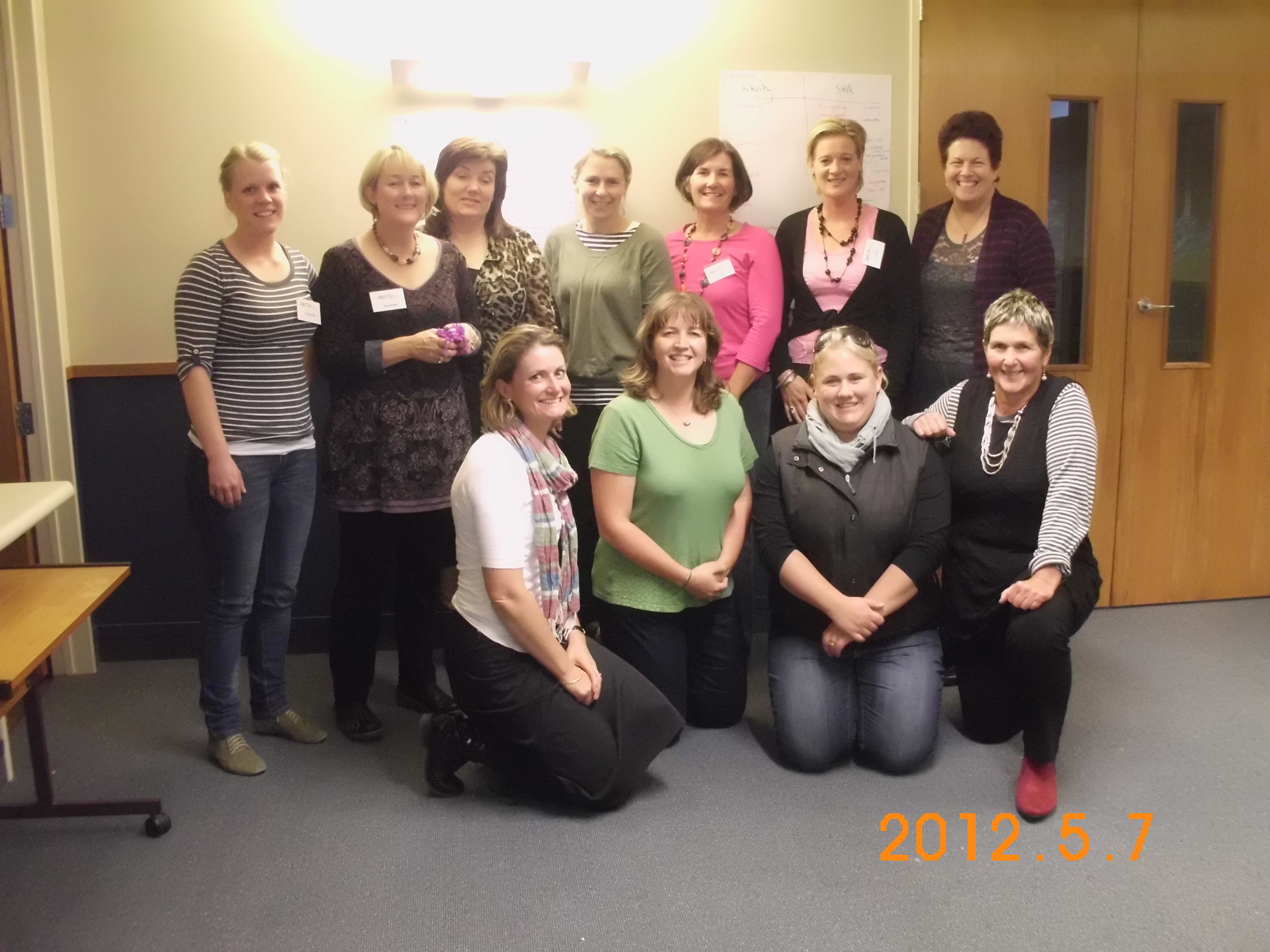
The picture is a group of women in NZ at a recent First Steps Program.

Feedback… some more

Thankyou to the 32 people who are following my blog, I really appreciate your support.

I have been working away at this for 6 months now and this will be my 25 post .. quite an effort for someone who 12 months ago had never really read or followed a blog! For this I must thank Alice, my wonderful daughter, who got me started on the social media journey.

My book remains about 60% complete … work keeps getting in the way. Maybe over the Xmas break I will get time to write some more and the blog content will help with some of the gaps.

I would love some feedback from my readers about my blog

  • What have you enjoyed?
  • What would you like more of?
  • What would you like less of?
  • Is it worth your effort and time and mine?
  • Would you recommend workshopswithwow? please explain…
  • What other topics would you like explored in the blog?
  • Any other comments ……

Thanks again for your support and I appreciate any comments – either on the blog or email me jeanette@agconsulting.com.au

I look forward to hearing from you.

Feedback

Feedback – it’s something we all like to have so we can improve .. even though sometimes we might not like what we hear!

Good constructive feedback helps us grow and learn, develop our skills and become better at what we do. Without it we may tend to keep doing what we have always done because it works for us.

I like to evaluate every workshop using several techniques if possible. These might include

  • Finishing off the day with an ORID – this is asking an Objective, Reflective, Interpretive and Decisional question of the group, it aims to captures the facts, feelings, key messages and changes.
  • If there isn’t time for an ORID …as a minimum asking for a closing comment from everyone
  • Evaluation forms
  • On-line surveys
  • Discussion with a co-facilitator or trusted colleague  (who you know will be honest!) What worked well? What could be done differently?
  • Contact a participant or two after the event and check in with them. Plan a few questions rather than having a general conversation. I like to know what they have implemented or changed since attending the workshop.
  • A self evaluation – if we are really honest with ourselves we know when things have gone well or could have been better – I like to think this through and make some notes in my journal to refer back to. Remember can be our own worst critic so don’t be too hard on yourself!

I’d really like to hear from all of you about feedback ..

  • What is the best way to get the feedback?
  • Are you really honest on evaluation forms?
  • Is it better to reflect and then provide feedback via an online survey later?
  • Will you complete a survey after you have left the workshop or is this too late?
  • What is the best way for a facilitator to receive honest feedback from you?

Finally as Ken Solly told us at an Adaptive Management workshop last week – “Milk every mistake for all it’s worth.”

Looking forward to hearing some thoughts …..

The Ignite Leadership Coaching Course is one of those training events that made me go WOW! I did the training with Tony Draper from the Forton Group and Sharon Honner a couple of years ago in Queensland.

I was so impressed I went back to Queensland in October last year and completed the course again along with the Train the Trainer so Sharon and I could facilitate this course together.

We facilitated our first workshop in Adelaide late in June and were thrilled with the feedback we received. We were very fortunate to have Tony come to Adelaide to support us as we facilitated this for the first time.

The Forton Group is an international organisation who has designed The Professional Leadership Coach Training Programme to meet the needs of organisations and the people who work in them. The Programme is accredited with the International Coach Federation, and consists of four modules – The Ignite workshop being the first of these.

The concept of coaching is often not clearly understood as we often relate to Sports Coaching or coaching for a skill. The Forton Group define coaching as “Supporting people to get what they want, without doing it for them, or telling them what to do. The coaching conversation is an art, a science and a practice.”

In contrast to a mentor who has experience in a field and acts as a guide, a coach knows how to ask great questions so the coachee can discover for themselves and experience their own journey.

I also particularly like the Forton Groups definition of leadership; “Leadership is about people being successful and enabling success in others. Leadership is more than a position: it is who we are, what we achieve and how we do it.”

The Ignite Leadership Coaching is the foundation course, it introduces the professional leadership coaching model. It touches on emotional intelligence, how we coach to develop peoples’ emotional capacity, introduces the model and focuses on leadership vision and accessing resources.

Sharon and I hope to offer this fantastic program again later in 2012 or early in the new year. If this sounds of interest to you let us know.

If you would like to follow my blog enter your email address in the space on the right hand side of the screen, you will receive an email and you must click confirm to be added to the email list. thanks 🙂